A Route to the Future of Baltic Manors
After successfully establishing “Baltic Manors” as a tourism umbrella brand for manor houses across the Baltic Sea Region, the associations, tourism organisations and research institutes involved are now taking the next step: developing a “Baltic Manors Route” as an officially recognised Cultural Route of the Council of Europe. In doing so, they aim to foster the new life within these old walls, strengthen it for the long term, and carry it forward into the future.
Every major stage in life begins with its first steps — and with that familiar mix of excited anticipation, eager expectation and a measure of uncertainty: will it turn out well? That is how everyone involved felt when they founded the Baltic Manors Association. These include national and regional manor associations from Poland, Denmark, Sweden, Germany and the Baltic states, supported in turn by local tourism organisations and research institutes. The aim of this new transnational association, which has already attracted eight formal member organisations from five countries since 2024, is to create a Baltic Manors Route and apply for official recognition as a European Cultural Route. The scale of the ambition is considerable. It is about the unique cultural landscape in the hinterland of the Baltic Sea coasts, which has the highest density of manor houses anywhere in the world. It is about architectural ensembles that have shaped rural life and created identity for centuries. It is about the fascination of a shared cultural heritage that transcends national borders — and which has seen new life return in recent years through a new generation of owners and operators, the so-called space pioneers. This reality has already been acknowledged through the establishment of a joint tourism brand: “Baltic Manors – Old places, new life.” Now the journey continues.
But how do 10,000 houses in eight countries become a route?

At first glance, the characteristics of Baltic manor heritage outlined above are a perfect fit for the requirements of a ‘European Cultural Route’. At second glance, however, the actors involved had questions.
The Council of Europe awards the Cultural Routes label to initiatives that use tourism to bring valuable shared heritage to life, preserve it, and pass it on to the next generation. The original impulse for the application was the desire to take joint tourism marketing to a new level and put it on a lasting footing. At the same time, the label is intended to strengthen political leverage at national level vis-à-vis heritage authorities and funding bodies. The new owners of these houses can really use help of every kind. Unlike large-format heritage sites such as the palaces, cathedrals and museums of the world, Baltic manors are not operated by the state or the church. They usually depend on private initiative and viable operating models. In a sense, preserving this heritage is a grassroots undertaking, and everyday life for manor-house rescuers can be demanding. So naturally, questions arise. Will certification come with obligations for documenting the historical background that cause the already long to-do lists of manor life to overflow? And how can around 10,000 houses— 1,000 of them already used for tourism and spread across eight countries around the Baltic Sea — be linked into a route? After all, one of the Council of Europe’s requirements, and an important goal of those involved, is the creation of bookable offers.
There is another point: the people rescuing Baltic manor houses are independent-minded. They will not bend over backwards for a certification or marketing framework that is too tight. It is precisely the distinctive spirit of the operators and their highly individual new uses — from hotels, yoga and museums to co-working, art and culture — that makes the “new life” in these “old places” so attractive to visitors. People love having coffee with the new manor owners and becoming part, for a few days, of their often very individual undertakings. How much bundling and framing through a shared and scientifically grounded heritage concept can it take?
Certification is proving to be a best-practice method for tourism valorisation
Just a few more steps on this journey were enough to dispel most of those concerns. For instance, a closer engagement with the criteria, as well as initial exchanges with existing initiatives such as the “Hansa Route” and the “European Route of Industrial Heritage”, helped to clarify what certification would — and would not — require. It became clear that one single route through all participating countries is not required. What is wanted instead are regional routes and clusters that can be experienced and booked within realistic timeframes. Nor is a far-reaching historical reappraisal of every single house expected. The Council of Europe places the emphasis on the “new life.” In most manor houses, that colourful new everyday life is already unfolding on a historical stage to which today’s owners and operators feel deeply connected. That, for most of them, is part of what makes these places so compelling and worth preserving with such dedication.

What the criteria for a European Cultural Route do spell out more clearly are certain values that should be promoted through these activities: core European values of an open, pluralistic and democratic society, and of a Europe that continues to grow together in diversity. This, too, corresponds very closely to the spirit that has moved into most manor houses in recent years. The new manor culture shaped by the space pioneers is, in many places, open to visitors, open to diversity and open to exchange across national borders. It is energising a new rural life and turning manor houses once again into anchors of identity for local communities. The new transnational sense of community emerging under the umbrella of the Route also has historical points of connection. For centuries, many of the original owner families were linked across borders. Those connections are now blossoming again among today’s manor pioneers in a contemporary European spirit.
Taken as a whole, the criteria for certification are proving to be a best-practice methodology for the tourism valorisation of manor houses in the Baltic Sea Region. Visitors — often very receptive to the mission of saving manor houses and to new forms of rural life — will feel all the more that their stay in these places makes them part of something larger: preserving a shared European heritage and contributing to Europe growing closer together. It is regenerative tourism in an ideal form. The term “Route” also evokes exactly the right associations. One immediately pictures the typical tree-lined avenue winding through rolling hills, linking one manor house to the next. In Lithuanian, there is even a saying that there is a manor on every hill.
There is broad consensus among the members and supporters of the Association that this path is worth taking. But everyone also knows that it will require a considerable effort. By 2028, the certification process as a Cultural Route of the Council of Europe is to be completed. Before that, another condition must be met: The Route must already have taken clearer shape. It must be experienceable through tourism offers and supported by solid cooperation structures. So, there is much to do before the official opening of the international Baltic Manors Route, planned for spring 2027. That is why the Baltic Manors Association is relying on a clear division of labour. Tourism organisations are responsible for tourism positioning and for developing regional routes, including permanently staffed entry points at hotels, museums or visitor centres. Manor associations focus on building the network and the cooperation structures. A scientific committee is working on how the heritage of Baltic manors can be defined and geographically delineated more precisely. And all involved are engaged in a stimulating dialogue about how preserving this shared heritage can communicate European values and contribute to Europe growing closer together. In that context, the Association is considering capturing the shared present-day values underpinning the Baltic Manors Route in a charter to be brought to life by its members.

Starting this year, visitors can already experience this new manor life in the spirit of the European Cultural Route. The festivals with guided tours and cultural activities that have been taking place for several years in all participating regions on different weekends are now being marketed together under one umbrella as the “Baltic Manors Festival”. From June 2026, comprehensive information will for the first time be available from a single source on the Baltic Manors website. In this way, manor enthusiasts are to be encouraged to travel on to another country and experience the same heritage in a different local setting. This has already been tested in personal conversations with the target group. The aha effect works: the world of manor houses is far larger than many people think, and the neighbouring countries also have a great deal to offer. Alongside regional routes and the festival, further offers and tours involving several countries are therefore being developed. For lovers of art, architecture and manor houses, what could be better than travelling through several countries and visiting outstanding destinations with galleries, museums and sculpture gardens?
“People will visit these places with the awareness that they are becoming part of something bigger — part of a shared history and a common vision for the future.”
Passing the spark on to the next generation
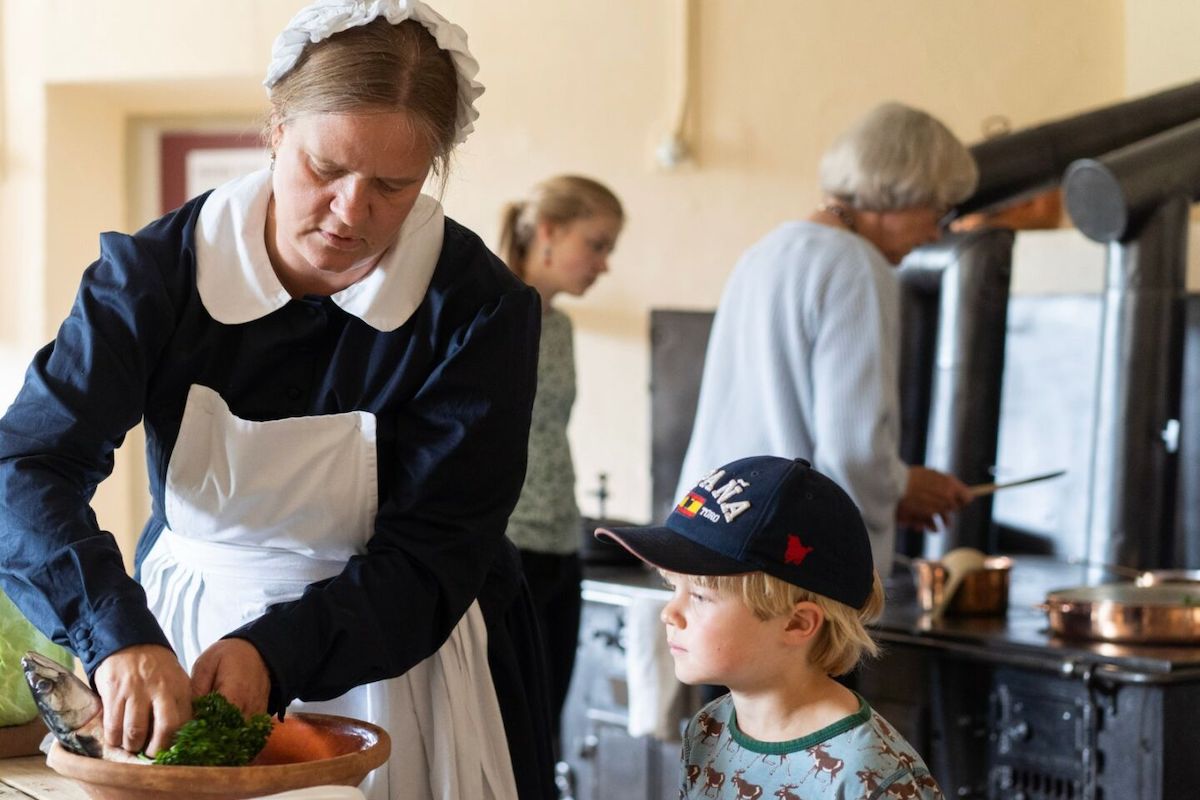
There will also need to be offers for young people, because cultural exchange for the next generation is one of the clearly defined criteria of the European Cultural Routes. That is why this year’s Baltic Manors Festival programme is already being designed with younger audiences more strongly in mind and, for the first time, it will also be accompanied on social media. Once the interest of the next generation has been sparked, the aim is to build on it. Through youth exchange and work-and-travel formats, the spark of enthusiasm for manor houses is meant to pass on to the next generation.
The Baltic Manors Association, as umbrella organisation, will carry all these activities. Financially, the initiative is being supported again by the EU’s Interreg South Baltic Programme, just as it was during the development of the Baltic Manors brand between 2018 and 2022. The fact that this follow-up funding has been approved is unusual and underlines the initiative’s potential. At the same time, the umbrella association itself is meant to remain lean. The key actors in advocacy and marketing will continue to be the national manor associations. The task now is to invite as many as possible of the region’s 10,000 manor houses to join these associations and to shape the Baltic Manors Route together. The first opportunity to present themselves jointly at national level and represent shared interests will be the Baltic Manors Day, which will take place for the first time on 22 and 23 April 2026, simultaneously in all member countries.
Experience shows that another core focus of the Baltic Manors Association — exchange among manor pioneers — tends to take care of itself on such occasions. You simply have to bring these people together in a beautiful old manor hall and serve enough coffee. They usually start talking all by themselves. With all the challenges and all the joy that come with an old building and the new life that has moved into it, there is never any shortage of topics. And in the end, it usually comes down to the one that matters most to all of them: the future of these houses.